Sharklady Adventures offer thrilling shark cage diving tours, that’s informative and educational. Our trips are small and exclusive, giving you Read more...
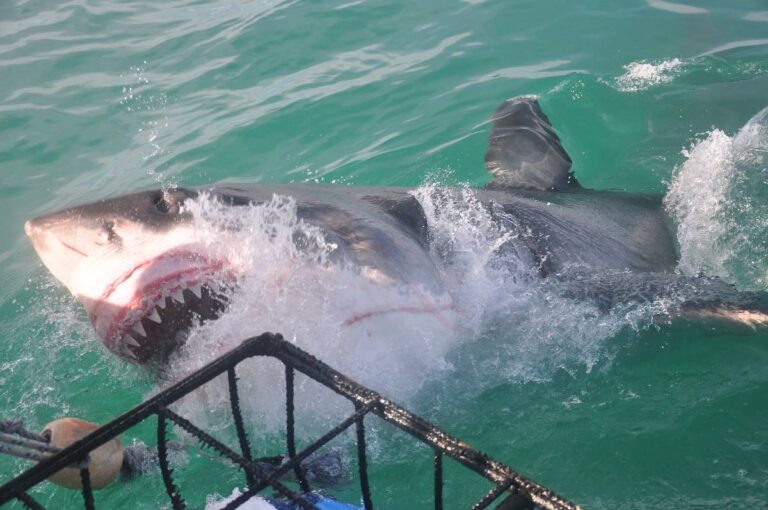
Van Dyks Bay occupies a strategic and visually striking position on the Danger Point Peninsula, a rocky finger of land that extends into the Atlantic Ocean. The geography is characterized by a rugged coastline of sandstone cliffs and kelp-strewn rock pools, sloping gently from the inland hills toward the sea. The area falls within the Overberg Coastal Fynbos biome, featuring a diverse array of salt-tolerant shrubs and seasonal wildflowers that thrive in the nutrient-poor soils and sea spray. Just offshore lies the Dyer Island nature reserve and Geyser Rock, which create a protected channel known as "Shark Alley." This unique marine topography is essential to the region's ecology, providing a sanctuary for the African Penguin, Cape Fur Seal, and the apex predators that follow them.
The economic life of Van Dyks Bay is almost exclusively defined by its status as a global epicenter for marine megafauna tourism. The local economy revolves around Kleinbaai Harbour, a small but high-traffic slipway that serves as the primary launch point for shark cage diving and whale watching expeditions. This industry supports a specialized workforce of marine biologists, commercial skippers, and hospitality professionals. Beyond the direct tourism operators, the settlement hosts a variety of guest houses, restaurants, and the African Penguin and Seabird Sanctuary, which focuses on the rehabilitation of local marine species. The presence of these conservation-oriented businesses has transformed the town from a quiet holiday retreat into a sophisticated hub for environmental research and eco-tourism, drawing international visitors throughout the year.
Historically, Van Dyks Bay began as a humble seasonal retreat, often referred to as a "tentdorp" where farming families from the interior would camp during the summer months. Over time, this evolved into a permanent settlement characterized by modest fisherman's cottages and holiday homes. The cultural identity of the town is deeply connected to the treacherous maritime history of the Danger Point Peninsula, famous for the 1852 wreck of the HMS Birkenhead. While modern development has introduced luxury residences and contemporary infrastructure, the village retains elements of its architectural heritage, with several original cottages designated as heritage resources. The community remains a blend of long-standing residents and conservationists, united by a shared identity rooted in the sea and a commitment to protecting the prehistoric marine life that defines their shores.