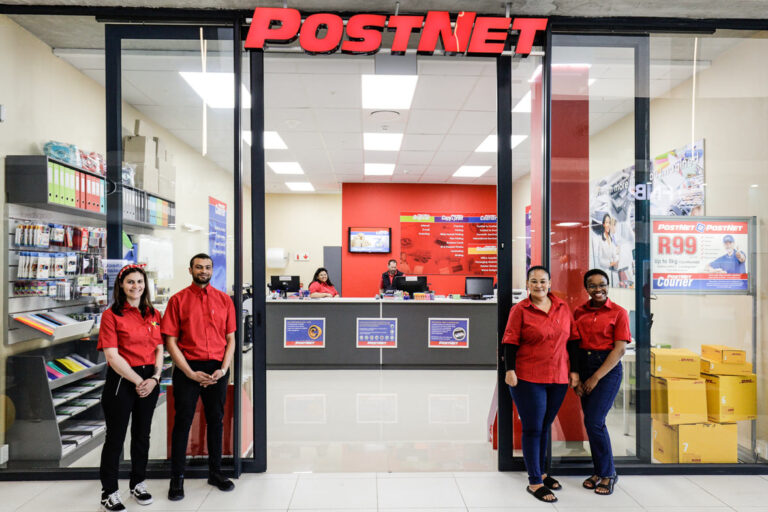
PostNet Mokopane provides various business solutions, including printing, courier services, stationery products, and digital solutions. – Postnet Copy & Print Read more...
Sorry, no records were found. Please adjust your search criteria and try again.
Sorry, unable to load the Maps API.
South Africa boasts a robust and dynamic courier industry, catering to both businesses and individual customers.
The sector offers a diverse range of services from same-day express delivery, and overnight shipping, to international logistics solutions. Courier companies in the country operate with an emphasis on speed, reliability, and security, offering door-to-door delivery services that are essential in today’s fast-paced commercial environment.
Their offerings also include value-added services such as package tracking, proof of delivery, and insurance.
South African courier services are equipped to handle a wide range of goods, from small parcels to bulky goods, leveraging an extensive network of road, air, and sometimes rail routes. With the advent of e-commerce, these companies have also adapted to meet the rising demand for efficient parcel delivery and return services, contributing significantly to the country’s digital economy.
As South Africa’s economy continues to grow and diversify, the courier industry stands as a vital pillar supporting both commerce and personal communication in the nation.
Heidelberg is a premier industrial and agricultural node located approximately 50 kilometres southeast of Johannesburg. Strategically positioned at the intersection of the N3 freeway and the R42 provincial route, the town serves as a critical gateway between Gauteng and KwaZulu-Natal. Historically known as a quiet Victorian-style town, it has evolved into a vital component of the Gauteng City Region’s southern development corridor.
In 2026, the local economy is entering a transformative phase with the designation of the Vaal Special Economic Zone (SEZ). As of April 2026, public consultations are underway for land parcels in Heidelberg that will form part of this multi-tier industrial hub. The SEZ is designed to attract high-impact investments in green industrialisation, low-carbon manufacturing, and renewable energy production. For investors, Heidelberg offers an established industrial base with excellent logistical connectivity and a workforce traditionally skilled in manufacturing and heavy engineering.
The Lesedi municipal area is primarily rural, and Heidelberg serves as the main service centre for a robust agricultural hinterland. The region is a significant producer of maize, grain, and livestock. In 2026, the agricultural sector is being integrated into the broader SEZ strategy, which prioritises agro-processing and the strengthening of food value chains.
The 2026 provincial budget has allocated significant resources toward revitalising industrial parks and developing township automotive hubs in the region. These initiatives aim to integrate local firms into regional value chains under the African Continental Free Trade Area (AfCFTA). For entrepreneurs, the proximity to the Johannesburg market combined with the new SEZ incentives makes Heidelberg a prime location for specialized food processing, cold-storage logistics, and technical agricultural services.
Heidelberg is renowned for its well-preserved historical character and its proximity to major natural landmarks. The town served as the capital of the Zuid Afrikaansche Republiek (ZAR) from 1880 to 1883, and its streets are lined with significant Victorian architecture. The Heidelberg Heritage Museum, located in the restored 1895 Victorian railway station, remains a cornerstone of the town's cultural tourism.
Natural attractions are a major drawcard for the region:
Suikerbosrand Nature Reserve: Spanning over 13,000 hectares, it offers world-class hiking, cycling, and environmental education just outside the town.
Alice Glockner Nature Reserve: A specialized reserve dedicated to protecting the rare Heidelberg Copper Butterfly and various indigenous flora.
Marievale Bird Sanctuary: Located nearby, it is a key site for birdwatchers and nature enthusiasts.
In 2026, the tourism sector is benefiting from a trend toward "adventure-semigration," where professionals visit the town for weekend recreation while considering residential investment in its scenic mountain-view estates.
The town’s logistical advantage is underpinned by its position on the N3 Corridor, the busiest freight route in South Africa. This connectivity facilitates the rapid movement of goods between the industrial heartland and the Port of Durban. In early 2026, provincial roads and transport budgets have prioritised road upgrades and maintenance along the R42 and R23 to handle increased heavy-vehicle traffic linked to the new SEZ developments.
Infrastructure highlights for 2026 include:
Vaal SEZ Bulk Infrastructure: Deployment of energy and water services to support new industrial land parcels.
Digital Connectivity: Expansion of high-speed fibre networks across the Heidelberg-Ratanda urban node to support the Gauteng Provincial Network and digital administrative services.
Healthcare and Schools: Ongoing refurbishment of local community facilities to meet the needs of a growing, youthful population.
With its mix of historical gravity, strategic transport links, and the massive industrial stimulus of the Vaal SEZ, Heidelberg stands as one of Gauteng’s most promising growth nodes in 2026.