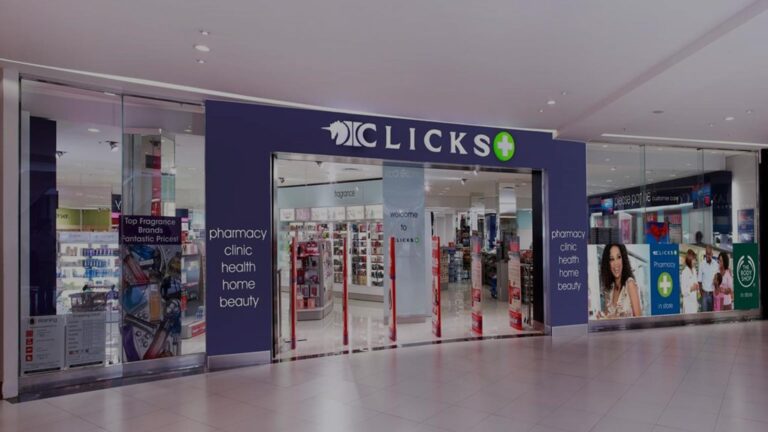
About Clicks Queenstown Founded over 55 years ago in 1968, Clicks is the country’s leading health, beauty and wellness retailer Read more...
Sorry, no records were found. Please adjust your search criteria and try again.
Sorry, unable to load the Maps API.
In South Africa, pharmacies serve as essential cornerstones in the healthcare landscape, providing a comprehensive range of services beyond just prescription dispensing. They are often the first point of contact for medical advice, offering over-the-counter remedies and expert consultations. From metropolitan hubs to rural settlements, these establishments are critical in making healthcare accessible and affordable. Advanced pharmacies in urban areas frequently incorporate digital solutions for seamless service, while those in smaller communities often foster a personalised experience. The pharmacists are highly-trained professionals, regulated by the South African Pharmacy Council, ensuring that citizens receive top-tier care. Overall, pharmacies in South Africa embody a blend of traditional values and modern innovation, contributing significantly to the nation’s well-being.
In 2026, Komani remains the indispensable "shopping basket" and service center for the central Eastern Cape. Its economy is fundamentally anchored by retail, government services, and commercial agriculture, specifically serving the surrounding wool, beef, and dairy farming districts.
The 2026 economic outlook is defined by a "Return to Basics" strategy spearheaded by the Enoch Mgijima Local Municipality. After years of administrative challenges, early 2026 has seen a surge in private-sector confidence, evidenced by the expansion of the Nonesi Mall and the refurbishment of industrial nodes in Queendustria. For investors, the focus for 2026 is on agro-processing—specifically the local beneficiation of wool and mohair—as the Chris Hani District aims to reduce its reliance on exporting raw materials. The town’s position at the intersection of the N6 and R61 corridors continues to make it a high-potential logistics hub for freight moving between East London, Mthatha, and Bloemfontein.
Tourism in Komani for 2026 blends unique colonial town planning with the rugged natural beauty of the Stormberg foothills.
Key highlights for 2026 include:
The Hexagon: The town's unique central layout, designed in 1853 as a defensive measure. In 2026, it serves as the vibrant commercial and social core of the city.
Lawrence de Lange Nature Reserve: Perched on the slopes of the Madeira Mountain, this reserve remains a 2026 favorite for hikers and mountain bikers, offering sightings of rhino, giraffe, and various antelope species.
Bongolo Dam: A 2026 hotspot for water sports and angling. Despite historical drought concerns, the dam remains a scenic retreat for local residents and visitors.
Victorian Architecture: Komani boasts some of the best-preserved Victorian-era buildings in the province, including the Town Hall and several historic schools like Queen's College and Girls' High.
Queenstown Golf Club: One of the oldest and most scenic courses in the Eastern Cape, it continues to draw regional tournaments in 2026.
The city’s history is a narrative of frontier conflict and eventual commercial prosperity. It was founded in 1853 by Sir George Cathcart and named Queenstown in honor of Queen Victoria. The town was famously laid out in a hexagonal shape so that every street could be covered by gunfire from the central square—a design necessitated by the ongoing Frontier Wars.
In February 2016, the city was officially renamed Komani, honoring the Komani River that flows through the area. This name change was part of a broader national effort to reflect the indigenous history of the region. Historically, the town served as a vital military and administrative base, evolving into a wealthy agricultural hub during the wool boom of the mid-20th century. In 2026, the city honors both its colonial architectural legacy and its modern identity as a inclusive provincial capital.
Under the Enoch Mgijima Local Municipality’s 2025/2026 Integrated Development Plan (IDP), Komani is a priority site for large-scale utility stabilization to attract further investment.
Key infrastructure highlights for 2026 include:
Electrical Substation Upgrades: In early 2026, the municipality initiated a R120 million project to refurbish the primary substations in the CBD and industrial zones. This is critical for ending the "loadshedding-plus" issues caused by aging infrastructure.
Smart Meter Rollout: Following a pilot program in late 2025, the 2026 budget has prioritized the installation of smart prepaid meters for both water and electricity to improve municipal revenue and prevent illegal connections.
Water Pipeline Rehabilitation: To address persistent water leaks, the 2026 IDP outlines the replacement of several kilometers of asbestos-cement pipes with modern HDPE piping, funded through the Municipal Infrastructure Grant (MIG).
N6 Corridor Maintenance: SANRAL has prioritized the maintenance of the N6 section passing through Komani in mid-2026, ensuring that the city remains a viable and safe link for heavy-vehicle transport between the coast and the interior.