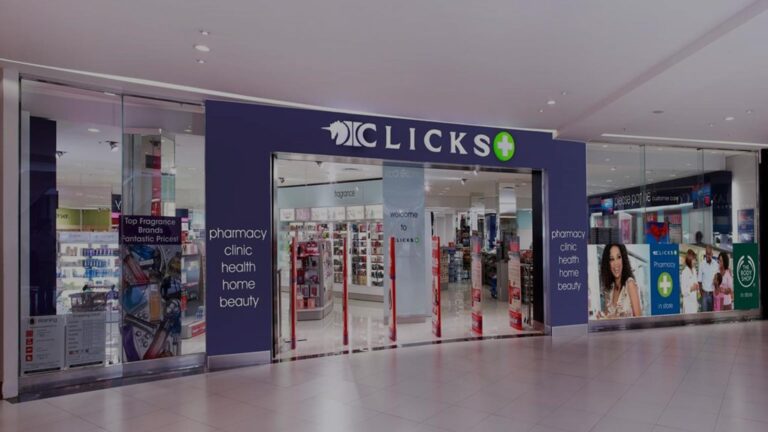
About Clicks Fort Beaufort Founded over 55 years ago in 1968, Clicks is the country’s leading health, beauty and wellness Read more...
Sorry, no records were found. Please adjust your search criteria and try again.
Sorry, unable to load the Maps API.
In South Africa, pharmacies serve as essential cornerstones in the healthcare landscape, providing a comprehensive range of services beyond just prescription dispensing. They are often the first point of contact for medical advice, offering over-the-counter remedies and expert consultations. From metropolitan hubs to rural settlements, these establishments are critical in making healthcare accessible and affordable. Advanced pharmacies in urban areas frequently incorporate digital solutions for seamless service, while those in smaller communities often foster a personalised experience. The pharmacists are highly-trained professionals, regulated by the South African Pharmacy Council, ensuring that citizens receive top-tier care. Overall, pharmacies in South Africa embody a blend of traditional values and modern innovation, contributing significantly to the nation’s well-being.
In 2026, KwaMaqoma continues to function as the agricultural and administrative engine of the Raymond Mhlaba Municipality. Its economy is fundamentally anchored by citrus farming, specifically within the fertile Kat River Valley. As of early 2026, the South African citrus industry is forecasting an export growth of approximately 5%, with KwaMaqoma’s lemon and orange orchards contributing significantly to the Amathole District's output.
The town also serves as a critical "dormitory" node for the University of Fort Hare, located in the nearby town of Alice. In 2026, the local economy benefits from a steady influx of academic staff and students who reside in the town, driving demand for rental housing and retail services. Under the Raymond Mhlaba Local Municipality’s 2025/2026 SDBIP (Service Delivery and Budget Implementation Plan), the town is being positioned as an "Administrative Head" to streamline municipal functions, supported by a provincial R105 billion budget aimed at strengthening rural service delivery and infrastructure.
Tourism in KwaMaqoma for 2026 is defined by its deep historical roots and its transition from a colonial military outpost to a center of Xhosa heritage.
Key highlights for 2026 include:
Chief Maqoma Heritage: As the namesake of the town, the legacy of Chief Jongumsobomvu Maqoma is the focal point for 2026 cultural tours. Visitors can explore sites related to his guerrilla campaigns in the Amathole Mountains during the Frontier Wars.
The Martello Tower: A rare circular stone fortification built by the British in 1837. In 2026, it remains a key architectural landmark, providing insight into the military history of the "Ceded Territory."
Confluence of the Kat and Brak Rivers: The scenic natural landscape surrounding the town is a 2026 favorite for photography and outdoor leisure, especially for those visiting the nearby Sulphur Springs.
Proximity to Hogsback: KwaMaqoma serves as a vital gateway for travelers moving toward the mystical mountain village of Hogsback, benefiting from the transit of eco-tourists and hikers.
Heritage Museum Updates: Local initiatives in early 2026 have focused on digitizing archives related to the Xhosa Wars of Dispossession, making the town's complex history more accessible to international researchers.
The history of the town is a narrative of conflict, colonialism, and eventual reclamation. It was established in 1822 as a military post and formally founded as a town in 1837, named Fort Beaufort after the 5th Duke of Beaufort, Henry Somerset.
The renaming to KwaMaqoma in March 2023 marked a significant shift in the town's identity. It honors Chief Maqoma (1798–1873), the right-hand son of King Ngqika. Maqoma was a brilliant military strategist who led Xhosa resistance during the Sixth and Eighth Frontier Wars. Despite his tactical successes in the Amathole region, he was eventually captured and died on Robben Island in 1873. In 2026, the town honors his spirit of resistance, transforming from a site named after a British aristocrat into a symbol of indigenous land rights and bravery.
Under the Raymond Mhlaba Municipality’s 2026/27 Integrated Development Plan (IDP), KwaMaqoma is a priority site for urban renewal and utility stabilization.
Key infrastructure highlights for 2026 include:
Housing Rectification Projects: The Hillside Phase 3 housing project, which involved the rectification of 115 units, was successfully completed in early 2025. In 2026, the municipality is rolling out Phase 4 to address remaining housing backlogs in the township areas.
Road and Bridge Rehabilitation: As part of the provincial R9 billion infrastructure allocation, the 2026 budget has prioritized the maintenance of the R63 corridor and internal gravel roads to support the transport of citrus freight and commuter traffic to Alice.
Satellite Office Model: To improve governance, the municipality is implementing a "Satellite Office Model" in 2026, centering administrative power in KwaMaqoma to bring services closer to residents of the outlying rural wards.
Water & Sanitation Upgrades: Ongoing 2026 projects focus on the refurbishment of bulk water supply lines from the Kat River Dam to mitigate the service interruptions that have historically affected the CBD and industrial zones.
Public Library Digital Overhaul: Following 2026 municipal notices, the local library is receiving hardware upgrades to support student research, strengthening the town's link to the University of Fort Hare's academic network.