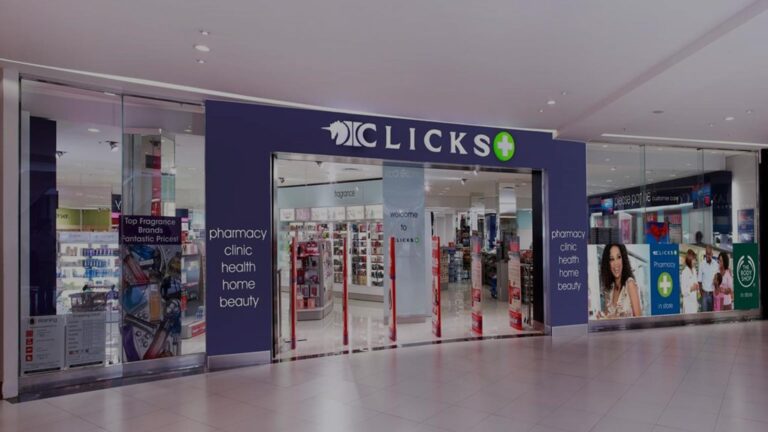
About Clicks Sanbury Square Founded over 55 years ago in 1968, Clicks is the country’s leading health, beauty and wellness Read more...
Sorry, no records were found. Please adjust your search criteria and try again.
Sorry, unable to load the Maps API.
In South Africa, pharmacies serve as essential cornerstones in the healthcare landscape, providing a comprehensive range of services beyond just prescription dispensing. They are often the first point of contact for medical advice, offering over-the-counter remedies and expert consultations. From metropolitan hubs to rural settlements, these establishments are critical in making healthcare accessible and affordable. Advanced pharmacies in urban areas frequently incorporate digital solutions for seamless service, while those in smaller communities often foster a personalised experience. The pharmacists are highly-trained professionals, regulated by the South African Pharmacy Council, ensuring that citizens receive top-tier care. Overall, pharmacies in South Africa embody a blend of traditional values and modern innovation, contributing significantly to the nation’s well-being.
In 2026, KwaMashu has transitioned from a residential dormitory into a vibrant integrated urban node. Its economy is fundamentally anchored by the Bridge City development, a multi-billion-rand "new town centre" that serves as the commercial heart for the 1.2 million residents of the PINK area.
Key 2026 economic drivers include:
The Bridge City Logistics Hub: In early 2026, the precinct saw a surge in retail and logistics activity. The Bridge City Mall remains the primary retail anchor, while the adjacent industrial sites are increasingly utilized for "last-mile" delivery services for the Durban North corridor.
Transit-Oriented Development: Under the 2025/2026 eThekwini Integrated Development Plan (IDP), KwaMashu is a central pillar of the GO! Durban Integrated Public Transport Network (IPTN). Corridor C1 (Bridge City to CBD via KwaMashu) and Corridor C2 (Bridge City to Umlazi) are critical arteries facilitating the movement of thousands of workers daily.
SMME Development: The 2026 municipal budget has prioritized "Township Economy Renewal," focusing on the formalization of small-scale service providers and street traders along Fanuel Mkhize Street, the township’s busiest commercial strip.
Tourism in KwaMashu for 2026 is defined by "Authentic Township Tourism," moving away from passive sightseeing toward immersive cultural experiences.
Key highlights for 2026 include:
Ekhaya Multi-Arts Centre (K-CAP): Founded by Edmund Mhlongo, this remains the cultural soul of the township. In 2026, it serves as a provincial hub for arts training and international theatre tours, hosting the KwaMashu African Film Festival and various heritage showcases.
The Inanda Heritage Route Connection: KwaMashu is the primary gateway for tours that link the forced removals of Cato Manor to the global significance of the Ohlange Institute and the Gandhi Settlement.
Shebeen and Culinary Culture: Popular 2026 tours focus on "Taste of Africa," where visitors interact with locals at historic shebeens and "shisanyama" (braai) spots, celebrating the township’s resilient social fabric.
Princess Magogo Stadium: Named after the Zulu Princess and mother of Mangosuthu Buthelezi, this venue remains a 2026 focal point for local football and community gatherings, symbolizing the town's sporting pride.
The history of KwaMashu is a narrative of displacement and the subsequent creation of a cultural powerhouse. The name is a Zulu adaptation of "The Place of Marshall," referring to Sir Marshall Campbell, the sugar magnate who originally owned the land.
The township was established in 1958 specifically to house the black residents who were forcefully removed from Cato Manor (Umkhumbane) under the Apartheid Group Areas Act. Historically, it was a hotbed of political activity and resistance throughout the 1980s. In 2026, the township honors this legacy through landmarks like the KwaMashu Community Health Centre (originally a polyclinic opened in 1962 to serve the displaced population) and the naming of streets after local heroes like Fanuel Mkhize.
As part of the eThekwini Municipality’s 2026 Infrastructure Master Plan, KwaMashu is receiving targeted upgrades to its aging utility and transport networks.
Key infrastructure highlights for 2026 include:
Bridge City Service Drive: In March 2026, the municipality completed a precinct-wide infrastructure audit, resulting in the replacement of over 80 streetlight poles and a 90% restoration of lighting functionality across the Bridge City/KwaMashu transit node.
Flood Recovery & Housing: A major 2026 milestone involves the relocation of 1,200 flood-affected families from informal settlements to permanent housing in Cornubia, situated on the periphery of KwaMashu.
Northern Wastewater Treatment Works: The 2026/27 capital budget has allocated significant funds for the upgrade of the Northern Wastewater plant, which is critical for supporting the increased residential density in the KwaMashu wards.
Digital Connectivity: The municipality’s "Smart City" drive in 2026 has expanded public Wi-Fi hotspots to major transit ranks and the K-CAP centre, facilitating digital access for students and job seekers.