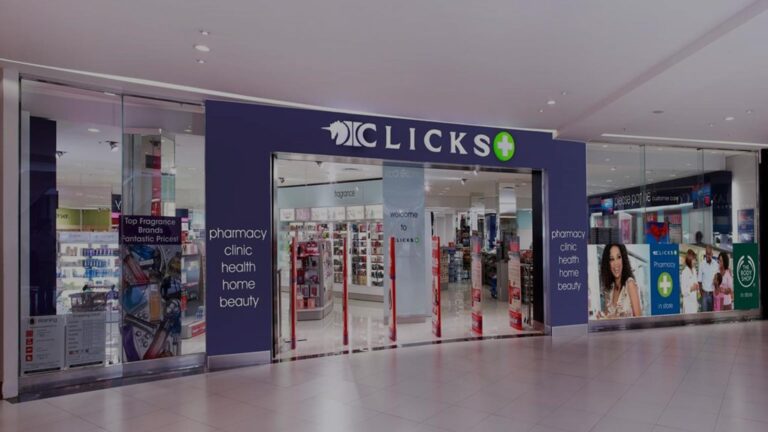
About Clicks Vryheid Founded over 55 years ago in 1968, Clicks is the country’s leading health, beauty and wellness retailer Read more...
Sorry, no records were found. Please adjust your search criteria and try again.
Sorry, unable to load the Maps API.
In South Africa, pharmacies serve as essential cornerstones in the healthcare landscape, providing a comprehensive range of services beyond just prescription dispensing. They are often the first point of contact for medical advice, offering over-the-counter remedies and expert consultations. From metropolitan hubs to rural settlements, these establishments are critical in making healthcare accessible and affordable. Advanced pharmacies in urban areas frequently incorporate digital solutions for seamless service, while those in smaller communities often foster a personalised experience. The pharmacists are highly-trained professionals, regulated by the South African Pharmacy Council, ensuring that citizens receive top-tier care. Overall, pharmacies in South Africa embody a blend of traditional values and modern innovation, contributing significantly to the nation’s well-being.
Vryheid is a major commercial and administrative hub situated in the rolling hills of northern KwaZulu-Natal, approximately 75 kilometres northeast of Dundee and 300 kilometres north of Durban. Established in 1884 as the capital of the short-lived Nieuwe Republiek (New Republic) after Boer mercenaries were granted land by King Dinuzulu, the town’s name—meaning "Freedom"—reflects its historical quest for independence. Geographically, Vryheid sits on a transitional belt between the high-altitude grasslands of the interior and the low-lying bushveld, creating a diverse landscape of wetlands, forests, and sandstone cliffs. It remains the largest town in the Zululand District, serving as a critical service node for the vast coal-mining and timber-farming regions that define its periphery.
In April 2026, Vryheid continues to experience a phase of urban renewal while contending with the infrastructure challenges common to many of South Africa's secondary cities. The town is characterized by its wide, oak-lined streets and a blend of historic Victorian architecture and modern commercial developments. As of 2026, the local atmosphere is one of industrial resilience, where the legacy of its mining past meets a contemporary push for economic diversification. Vryheid acts as the gateway to the "Battlefields Route," attracting a mix of business travelers, industrial contractors, and history enthusiasts who utilize the town as a base for exploring the significant Anglo-Zulu and Boer War sites in the northern interior.
The economy of Vryheid is fundamentally anchored in the primary sectors of mining and agriculture, with 2026 marking a shift toward value-added production. The Vryheid coalfields remain a primary source of anthracite and bituminous coal, though the industry in early 2026 has increasingly focused on "circular economy" initiatives, such as the beneficiation of coal discards and fly ash to create construction materials. Agriculture remains a dominant force, specifically the production of wattle, gum, and pine timber, alongside high-value livestock ranching. Under the provincial 2026 Economic Renewal Drive, several local saw units have received technical support to expand their processing capacity, aimed at boosting rural employment and timber exports.
Retail and consumer services have seen substantial growth following the full integration of the Princess Mkabayi Regional Shopping Mall, which opened in late 2024 and has reached full operational maturity by 2026. This R700-million investment has transformed Vryheid into a regional retail powerhouse, reducing the historical "leakage" of consumer spending to larger metros like Newcastle. In April 2026, the local business chamber reported a steady increase in service-sector activity, supported by the town's administrative role. However, the private sector has voiced concerns regarding utility reliability, prompting a 2026 municipal strategy to attract "off-grid" industrial investors by offering specialized land-use incentives for those implementing private renewable energy solutions.
Vryheid is home to several significant landmarks that trace the complex tapestry of 19th-century South African history, most notably the Raadsaal (Council Chamber) and the old parsonage of the Dutch Reformed Church, which now serves as a museum. These sites preserve artifacts from the era of the New Republic and the subsequent incorporation into the Colony of Natal. For nature and wildlife enthusiasts, the Klipfontein Bird Sanctuary is a globally recognized wetland site, particularly productive for flufftail and rail bird enthusiasts. In 2026, the sanctuary remains a focal point for environmental education, benefiting from new community-led conservation programs designed to protect the indigenous riparian habitats.
Recreational landmarks include the Vryheid Hill Nature Reserve, which offers panoramic views of the town and provides a sanctuary for indigenous flora and fauna. In early April 2026, the town’s social calendar featured the Lucas Meyer Rugby Week, a premier youth sporting event that brings thousands of visitors to the region. Additionally, the proximity to the Bloedrivierpoort and Hlobane battlefields ensures that Vryheid remains a central node in the provincial heritage tourism circuit. These sites are increasingly being marketed through digital "heritage maps" introduced in 2026, which allow visitors to access immersive historical narrations via QR codes situated at key memorial locations.
Under the AbaQulusi Local Municipality’s 2025/2026 Integrated Development Plan (IDP), Vryheid is undergoing a series of essential utility and transit modernizations. A major focus in early 2026 has been the asset renewal for water and wastewater systems, a multi-year project aimed at replacing aging pipes and pumps to mitigate the water supply disruptions that affected the town in previous seasons. Mayor Cllr SE Mkhwanazi confirmed in March 2026 that significant funding has been allocated to stabilize the CBD’s electricity grid and address the billing disputes that have historically strained municipal finances.
In terms of transport infrastructure, the Marasteni Bridge project is currently a priority, with an anticipated completion date of August 31, 2026, which will improve connectivity between the industrial zones and residential townships. Road maintenance has faced challenges in early 2026, specifically regarding the P34-5 road project, which saw temporary delays due to provincial payment disputes but is expected to resume full-scale construction by mid-year. Furthermore, as part of the provincial "Digital KZN" rollout, Vryheid’s municipal libraries and health clinics were equipped with high-speed satellite internet hubs in early 2026, providing essential digital resources to the local student population and improving administrative efficiency within the AbaQulusi district.