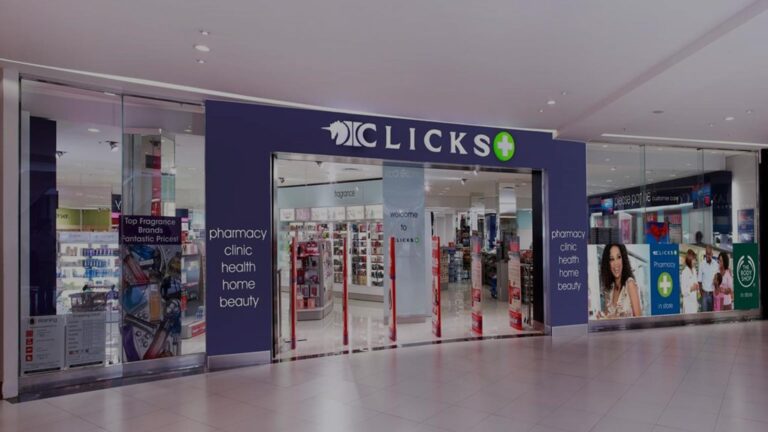
About Clicks Kwagga Plaza Founded over 55 years ago in 1968, Clicks is the country’s leading health, beauty and wellness Read more...
Sorry, no records were found. Please adjust your search criteria and try again.
Sorry, unable to load the Maps API.
In South Africa, pharmacies serve as essential cornerstones in the healthcare landscape, providing a comprehensive range of services beyond just prescription dispensing. They are often the first point of contact for medical advice, offering over-the-counter remedies and expert consultations. From metropolitan hubs to rural settlements, these establishments are critical in making healthcare accessible and affordable. Advanced pharmacies in urban areas frequently incorporate digital solutions for seamless service, while those in smaller communities often foster a personalised experience. The pharmacists are highly-trained professionals, regulated by the South African Pharmacy Council, ensuring that citizens receive top-tier care. Overall, pharmacies in South Africa embody a blend of traditional values and modern innovation, contributing significantly to the nation’s well-being.
In 2026, Kwaggafontein has solidified its role as the economic engine of the Thembisile Hani region. Its economy is fundamentally anchored by retail, light manufacturing, and logistics, largely due to its strategic position along the R573 Moloto Road corridor.
A major economic highlight for 2026 is the revitalization of the Kwaggafontein Industrial Park. Managed by the Mpumalanga Economic Growth Agency (MEGA), this "homeland-era" park is being refurbished to support SMMEs and agro-processing. The 2026 focus is on creating "incubation platforms" for local manufacturers. Additionally, the nearby marble mine continues to be a significant employer, producing limestone and crushed concrete slabs for the province's construction boom. For investors, the 2026 landscape is defined by the Nkangala District Development Model (DDM), which prioritizes the formalization of township economies and the expansion of the Kwagga Mall retail precinct.
Tourism in Kwaggafontein for 2026 is a deep dive into the vibrant, geometric world of the amaNdebele people. It serves as a gateway to the "Cultural Heartland" of Mpumalanga.
Key highlights for 2026 include:
Ndebele Mural Art: The town and surrounding villages are famous for their brightly colored, hand-painted geometric designs. In 2026, these murals remain a symbol of cultural resistance and identity, with local women passing the tradition to younger generations.
Kghodwana Cultural Village: Situated nearby in KwaMhlanga, this remains a 2026 flagship for Ndebele heritage. Visitors can explore traditional "kraals," learn about the significance of copper rings (idzilla), and shop for world-class beadwork.
Komjekejeke Cultural Heritage Village: A short drive away, this site will host the Africa Day Festival on May 30, 2026, a major regional event celebrating Nguni history and traditional music.
Kwagga Mall: Beyond shopping, the mall serves as a modern meeting point and a site for local craft markets where 2026 travelers can buy authentic Ndebele "gala blankets" and beadwork.
The history of Kwaggafontein is a narrative of endurance and the "return to the light" (the meaning of its name Ekukhanyeni).
The town was established in the late 1940s by AmaNdebele families who moved from farms in Bronkhorstspruit, Delmas, and Balmoral. These families sought to establish a central hub where their culture could flourish away from colonial displacement. The name "Kwaggafontein" (Quagga Fountain) is a nod to the extinct quagga (a subspecies of zebra) that once roamed the area’s fertile springs in massive herds. In 2026, the town honors this heritage by preserving its linguistic roots—isiNdebele is the primary language spoken by nearly 70% of the population—and by maintaining its status as a "modern, civilized" center that grew from humble pioneer beginnings.
Under the Thembisile Hani Local Municipality’s 2025/2026 Integrated Development Plan (IDP), Kwaggafontein is a priority site for large-scale social and transit infrastructure.
Key infrastructure highlights for 2026 include:
Mthombomuhle Sports, Arts, Culture and Recreational Centre: In March 2026, the municipality initiated Phase 1 of this state-of-the-art multi-purpose center. The project includes an auditorium, art stalls, and sports facilities, and is designed to house satellite offices for Home Affairs and SASSA.
R573 Moloto Road Upgrades: In 2026, SANRAL is in the advanced stages of the "Section 2" upgrades near Kwaggafontein. This includes widening critical intersections, installing high-mast lighting for night visibility, and constructing "cattle-creeps" to allow livestock to cross safely without entering the road.
Water & Sanitation Stabilization: The 2026 budget has allocated funds for bulk water reticulation (90mm HDPE piping) and a 65kl elevated water storage tank to address historical supply inconsistencies in the Ward 22 precinct.
Digital Transformation: Following the 2026 IDP review, the municipality has begun rolling out public Wi-Fi hotspots at the Kwagga Mall and municipal offices to support the growing number of digital entrepreneurs in the district.