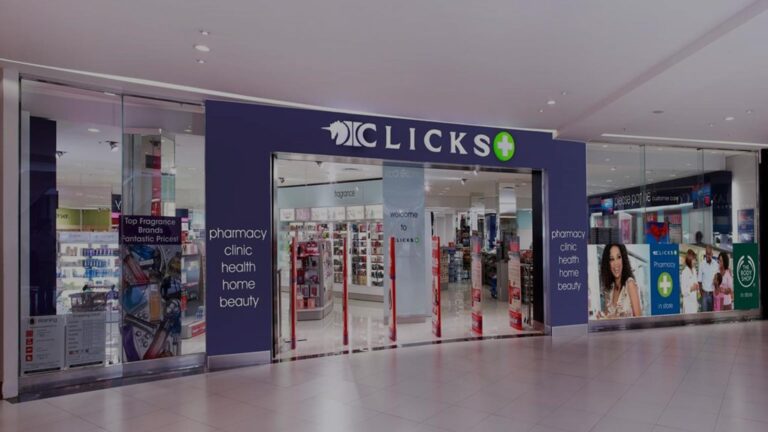
About Clicks Crossroads Plaza Founded over 55 years ago in 1968, Clicks is the country’s leading health, beauty and wellness Read more...
Sorry, no records were found. Please adjust your search criteria and try again.
Sorry, unable to load the Maps API.
In South Africa, pharmacies serve as essential cornerstones in the healthcare landscape, providing a comprehensive range of services beyond just prescription dispensing. They are often the first point of contact for medical advice, offering over-the-counter remedies and expert consultations. From metropolitan hubs to rural settlements, these establishments are critical in making healthcare accessible and affordable. Advanced pharmacies in urban areas frequently incorporate digital solutions for seamless service, while those in smaller communities often foster a personalised experience. The pharmacists are highly-trained professionals, regulated by the South African Pharmacy Council, ensuring that citizens receive top-tier care. Overall, pharmacies in South Africa embody a blend of traditional values and modern innovation, contributing significantly to the nation’s well-being.
In 2026, KwaMhlanga continues its role as the administrative nerve center for the northwestern region of Mpumalanga. Its economy is fundamentally anchored by government services, retail, and traditional land management. As the seat of the Thembisile Hani Local Municipality, the town’s economic pulse is dictated by public sector employment and the burgeoning township economy.
Under the 2025/2026 Integrated Development Plan (IDP), the town is shifting focus toward "Economic Transformation through Infrastructure." A standout development for early 2026 is the Mthombomuhle Sports, Arts, Culture and Recreational Centre. As of March 24, 2026, the municipality reached a critical milestone in Phase 1 of this multi-purpose facility, which is designed to house government service satellite offices, an auditorium, and retail stalls for local vendors. For investors, the 2026 landscape is defined by the Nkangala District Development Model, which aims to turn the town from a commuter hub into a self-sustaining commercial node.
Tourism in KwaMhlanga for 2026 is an immersive journey into the geometric world of the amaNdebele people, celebrating a culture that turned survival into high art.
Key highlights for 2026 include:
The 46th Annual King Silamba Commemoration: On March 7, 2026, the Ndebele nation gathered at the KoMjekejeke Cultural Village for this landmark festival. It remains the premier event on the 2026 cultural calendar, featuring traditional dance, the iconic copper neck rings (idzilla), and vibrant beadwork.
Kghodwana Cultural Village: Situated along the R568, this 2026 "living museum" allows travelers to explore 36 traditional huts that trace the evolution of Ndebele architecture from mud and thatch to the world-famous painted walls.
The Royal Kraals: The Manala Royal Kraal (near Klipfontein) and the Ndzundza Mabhoko Royal Kraal (Weltevreden) remain the spiritual anchors of the region. In 2026, small groups can still arrange visits to witness the traditional governance of the Ndebele kings.
Mkhombo Nature Reserve: Located within an hour's drive, this reserve offers 2026 travelers a bushveld escape with opportunities for birdwatching and fishing, serving as a tranquil contrast to the bustling administrative center.
The history of KwaMhlanga is a narrative of reclamation and identity. The name translates to "The Place of the Reeds," referring to the resilient plant life found in the area's original springs.
The town’s prominence rose in the late 20th century when it was established as the capital of the KwaNdebele homeland. It was designed to be the spiritual home of the Ndebele people, who had faced centuries of displacement. Unlike many other homeland capitals, KwaMhlanga maintained a deep connection to traditional leadership, ensuring that modern administrative structures were built around the existing royal houses. In 2026, the town honors this legacy by serving as the custodian of the isiNdebele language, which is spoken by over 50% of the local population.
Under the Thembisile Hani Local Municipality’s 2026/27 Draft IDP, the town is undergoing significant utility and transit modernization.
Key infrastructure highlights for 2026 include:
The R573 Moloto Road Revolution: Long known as the "Road of Death," the R573 is being rebranded in 2026 as the "Road of Hope." SANRAL's massive multi-billion-rand upgrade—including dual carriageways, roundabouts, and high-mast lighting—is nearing completion in the Mpumalanga section, significantly reducing the transit time and danger for the 60,000 daily commuters to Pretoria.
Digital Public Participation: Following the April 2026 IDP reviews, the municipality has prioritized the rollout of digital engagement platforms, allowing residents to use mobile devices to report service delivery issues and track municipal spending.
Water & Sanitation Stabilization: The 2026 budget has allocated specific funds for the replacement of aging asbestos water pipes with high-density polyethylene (HDPE) lines to address the persistent leaks that have historically plagued the KwaMhlanga Crossroads area.
SMME Incubation: The 2026 economic roadmap includes the expansion of the Kwaggafontein-KwaMhlanga industrial corridor, providing subsidized workshop space for local artisans and light manufacturers.