For more than two decades, we have partnered with a diverse customer base across both the Public and Private sectors, Read more...
Sorry, no records were found. Please adjust your search criteria and try again.
Sorry, unable to load the Maps API.
Information & Communications Technology (ICT) companies in South Africa help businesses, organisations, and individuals stay connected, productive, and digitally enabled in a fast-moving technology landscape. From internet connectivity and telecommunications infrastructure to cloud computing, cybersecurity, software development, and managed IT services, ICT businesses support the systems and technologies that modern organisations rely on every day.
South African ICT companies provide a broad range of solutions tailored to businesses of all sizes across multiple industries. Services commonly include IT support, network installation and management, fibre and wireless connectivity, hosted communication systems, data storage, cloud services, business software solutions, website and application development, cybersecurity protection, hardware supply, systems integration, and digital transformation consulting. Many providers also specialise in enterprise technologies such as automation systems, data analytics, artificial intelligence solutions, remote working infrastructure, and unified communication platforms.
As businesses increasingly adopt digital tools and cloud-based operations, ICT providers continue to play an important role in helping organisations improve efficiency, reduce downtime, strengthen security, and support long-term growth. Small and medium-sized businesses often depend on ICT companies for outsourced technical support and scalable technology solutions, while larger organisations require more advanced infrastructure, customised systems, and strategic IT planning.
The ICT industry in South Africa also contributes significantly to innovation, entrepreneurship, and economic development. Technology companies continue to develop solutions for sectors such as finance, healthcare, retail, logistics, manufacturing, education, tourism, and government services. Many ICT businesses focus on improving digital accessibility and communication infrastructure, helping expand internet access and digital connectivity across urban and rural communities alike.
Cybersecurity remains one of the fastest-growing areas within the ICT sector as businesses place greater emphasis on protecting sensitive information, securing networks, and maintaining compliance with data protection regulations. ICT providers assist organisations with backup systems, firewall management, endpoint protection, threat monitoring, disaster recovery planning, and secure cloud environments designed to minimise operational risk.
Whether delivering communication infrastructure, maintaining business-critical systems, implementing software platforms, or supporting digital transformation initiatives, Information & Communications Technology companies remain essential partners for organisations navigating South Africa’s evolving digital economy.

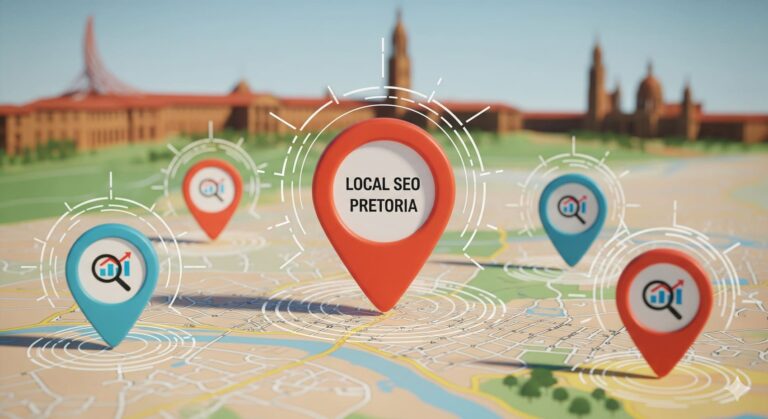
Pretoria is situated in the northern part of the Gauteng province and serves as the executive capital of South Africa. Founded in 1855 and named after the Voortrekker leader Andries Pretorius, the city is world-famous for its thousands of jacaranda trees that paint the streets in vibrant purple during the spring months.
It is a city of grand monuments, expansive parks, and deep historical significance, functioning as the administrative soul of the nation. Pretoria offers a sophisticated urban environment that balances its role as a political powerhouse with a high quality of life and a thriving academic culture.
Pretoria’s economy is defined by its role as a global diplomatic hub and a center for heavy manufacturing and research.
The Seat of Government: As the administrative capital, the city hosts the majority of South Africa's national government departments and over 130 foreign embassies and high commissions, making it one of the largest diplomatic centers in the world.
Automotive Hub: The northern suburb of Rosslyn is a titan of South African manufacturing, housing major assembly plants for global giants like BMW, Nissan, and Ford. This industrial cluster supports an extensive ecosystem of logistics and component manufacturing firms.
Education and Research: The city is a premier academic center, home to the University of Pretoria (UP), the Tshwane University of Technology (TUT), and UNISA (the largest open distance learning institution in Africa). It also hosts the Council for Scientific and Industrial Research (CSIR), the continent's largest research and development organization.
Commerce and Retail: Major retail nodes like Menlyn Park Shopping Centre—one of the largest in the Southern Hemisphere—and the innovative Menlyn Maine "green" precinct drive the city's commercial energy.
Pretoria offers a blend of historical gravity and natural beauty, reflecting the complex layers of South Africa’s journey.
The Union Buildings: Designed by Sir Herbert Baker, this crescent-shaped architectural masterpiece sits atop Meintjieskop. It is the official seat of the South African government and features a massive bronze statue of Nelson Mandela overlooking the city.
The Voortrekker Monument: A massive granite structure built to honor the pioneers of the Great Trek. It is a National Heritage Site known for its intricate marble friezes and its commanding view of the Tshwane skyline.
Freedom Park: Located on Salvokop, this heritage site acts as a memorial to those who died in the struggle for humanity and freedom in South Africa, offering a contemplative space that serves as a bridge between the past and the future.
National Zoological Garden: Commonly known as the Pretoria Zoo, this is the largest zoo in the country and is internationally recognized for its successful breeding programs and diverse collection of species.
Church Square: The historic heart of the city, surrounded by magnificent late 19th-century buildings like the Palace of Justice and the Ou Raadsaal, centered around the iconic statue of Paul Kruger.
The city’s infrastructure is designed to facilitate both local movement and vital national transit routes.
Gautrain: Pretoria is a primary terminal on the Gautrain rapid rail network, providing high-speed connections to Centurion, Sandton, and OR Tambo International Airport.
National Highway Hub: The city is the meeting point of the N1, N4, and N14 national highways, serving as the primary gateway to the northern provinces and neighboring countries like Botswana and Zimbabwe.
A Re Yeng: The city's bus rapid transit system provides dedicated lane services for commuters, integrating the various residential and commercial hubs of the capital with modern, efficient transport.
Pretoria stands as a symbol of South Africa’s transition—a city where historic colonial and apartheid-era architecture meets the vibrant, multi-cultural energy of a modern African capital.