Look Up Pro is a SACAA-registered drone services company providing safe, reliable, and professional UAV solutions across South Africa. We Read more...
Sorry, no records were found. Please adjust your search criteria and try again.
Sorry, unable to load the Maps API.
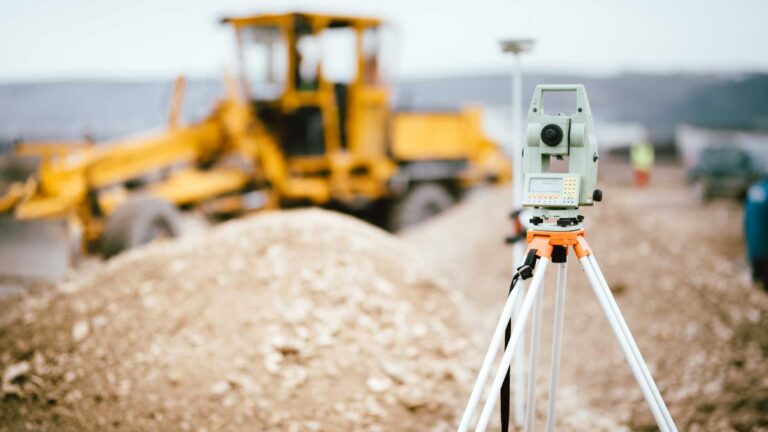
Land surveyors play a crucial role in South Africa, where land ownership and disputes over land rights are common issues. They are highly trained professionals who use specialized equipment and techniques to accurately measure and map the boundaries of properties and land parcels.
In South Africa, land surveyors must be registered with the South African Council for Professional and Technical Surveyors (PLATO), which sets strict standards for education, training, and ethical conduct. They work closely with other professionals in the real estate, construction, and land management industries, providing critical information that helps to guide decisions about land use and development.
Land surveyors in South Africa use a variety of tools, including GPS technology, aerial photography, and land measurement equipment, to produce highly detailed maps and plans. They also provide services such as the subdivision of land, setting out building foundations, and the demarcation of boundaries.
Land surveyors throughout South Africa help to ensure that land transactions are fair and transparent, and that land use is sustainable and responsible. Overall, land surveyors are essential to the proper functioning of South Africa’s land management systems, and they play a vital role in shaping the future of the country’s development.
In 2026, Krugersdorp continues to serve as the critical industrial and mining hub of the West Rand. Its economy is fundamentally anchored by manufacturing, mining services, and retail commerce. The Chamdor industrial area remains a significant provincial node, with a 2026 focus on "resilient manufacturing," particularly in food processing and automotive supply chains, which have shown cautious optimism despite global volatility.
The 2026 economic outlook is defined by the Mogale City Local Municipality’s 2025/2026 Integrated Development Plan (IDP). In March 2026, the municipality announced a significant milestone in its "Economic and Social Renewal" drive, having invested over R150 million in road infrastructure since the 2022/23 cycle to improve mobility for the city's industrial freight. For investors, the 2026 landscape is also influenced by the resurgence in the gold sector; with gold sales in South Africa reaching record highs in late 2025, Krugersdorp's specialized mining engineering firms have seen a localized boost in demand for equipment and maintenance services.
Tourism in Krugersdorp for 2026 is world-class, headlined by its proximity to the Cradle of Humankind, a UNESCO World Heritage Site.
Key highlights for 2026 include:
Cradle of Humankind Road Race (May 9, 2026): This major 2026 sporting event takes place at LOTZ Kontrei on the Sterkfontein Caves Road. It offers 5km, 10km, 21km, and 32km distances, drawing thousands of runners to the historic landscape.
Maropeng & Sterkfontein Caves: As of early 2026, the visitor center remains Africa's leading heritage destination. Interactive exhibitions and guided tours of the caves—where "Little Foot" and "Mrs. Ples" were discovered—remain a top-tier international draw.
Rhino and Lion Nature Reserve: A premier 2026 destination for families, offering predator camps, a reptile park, and the "Wonder Cave," which features 14-meter-high stalactite formations.
Ngwenya Glass Village: This artisanal hub continues to thrive in 2026, allowing visitors to watch glassblowers at work while exploring boutique shops and cafes.
The Silverstar Casino & Entertainment Centre: Serving as a primary entertainment node, it offers high-end dining, gaming, and 2026 theater performances just outside the main city center.
The city was founded in 1887 by Marthinus Pretorius on the farm Waterval following the discovery of gold. It was named Krugersdorp in honor of President Paul Kruger.
Paardekraal Monument: This Provincial Heritage Site remains one of the most significant monuments in the country. It commemorates the 1880 Vow of the Boers to regain their independence from British rule. The current structure, designed by Sytze Wierda and unveiled in 1891, marks the site where thousands of burghers placed stones to symbolize their unity.
Mining Heritage: Krugersdorp was built on the back of the 1880s gold rush, transitioning from a tented camp to a sophisticated Victorian-style town. In 2026, its architecture—particularly in the CBD—still reflects the wealth and pioneer spirit of that era.
Under the Mogale City Local Municipality’s 2026 Service Delivery Intervention, the city is undergoing a comprehensive infrastructure "turnaround."
Key infrastructure highlights for 2026 include:
Road & Stormwater Renewal: In March 2026, the municipality highlighted major road rehabilitation projects, including the extension of Robin Road and upgrades in the Kagiso precinct, as part of its R150 million mobility drive.
Kagiso Cemetery Drainage: Phase 1 of a critical drainage intervention at the Kagiso Cemetery was completed in March 2026, successfully addressing long-standing waterlogging issues that had affected the site.
Water Security Investment: The 2026 budget outlines a continued focus on water infrastructure, with R95 million allocated for water schemes and R250 million for regional bulk infrastructure to stabilize supply for high-growth areas like Thornhill.
Digital Public Participation: Following the 2026/27 Budget tabling, the municipality has prioritized digital engagement platforms, allowing residents to use WhatsApp and E-participation portals to influence service delivery priorities for the next financial year.